

The project is designed for working professionals within MNC companies, with a focus on dependent elderly family members and young children. Their comfort, safety, emotional needs, and daily experiences form the foundation of the design process.The design approach focuses on inclusivity, accessibility, emotional comfort, and spatial flexibility, ensuring that the environment feels both functional and homely. Through research into caregiving environments and emotional design strategies, the project identifies the need for softer, more human-centric corporate support spaces that reduce stress and encourage interaction. Materials such as soft upholstery, wood, fabric finishes, and rounded furnishings, along with techniques including layered spatial planning and curved circulation paths, were chosen to create a calm, safe, and welcoming atmosphere.

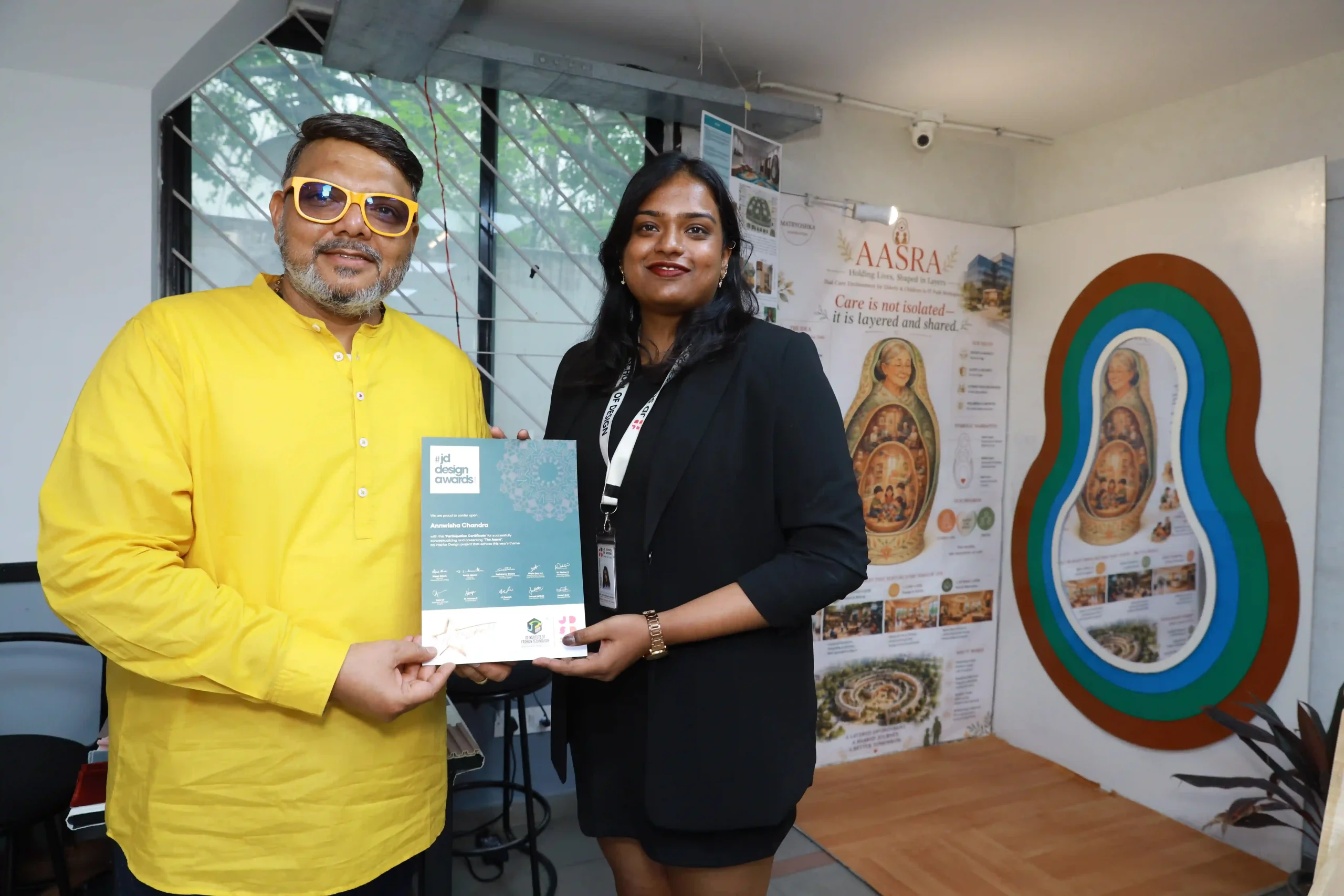


Visually, the project is defined by warm pastel tones, soft lighting, curved forms, and craft-inspired textures that reflect the nurturing essence of Matryoshka dolls. The final outcome, a thoughtfully designed corporate care facility, embodies emotional warmth, protection, and togetherness while creating spaces that encourage intergenerational bonding and relaxation.Through this project, the designer aims to highlight the importance of emotionally responsive and inclusive workplace environments, positioning design as a tool for empathy, care, and social well-being. Ultimately, “The Aasra” stands as a reflection of comfort, connection, and support, where thoughtful spatial design becomes a bridge between professional life and personal care.
