

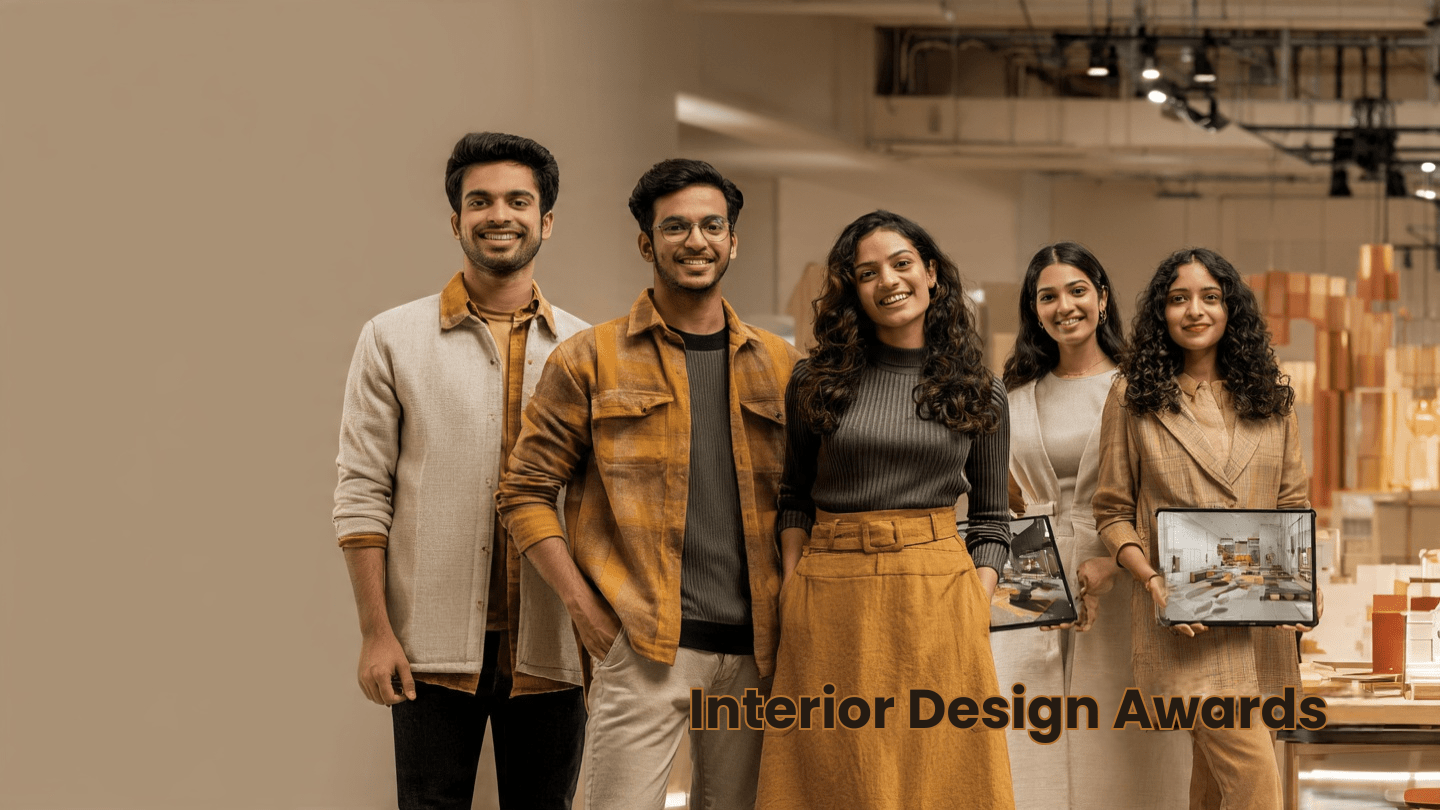
Interior Design Awards
Redefining Spaces Through the JD Interior Design Awards
The JD Design Awards celebrates the evolving future of interiors through one of the most future-focused interior design awards platforms in India. As contemporary lifestyles continue to transform, interior spaces are no longer designed only for aesthetics — they are becoming adaptive, sustainable, emotionally responsive, and technology-driven environments built around human experiences.
Recognized among emerging interior awards platforms for young creators and professionals, the JD Interior Design Awards encourages designers to explore innovation across residential, commercial, hospitality, retail, and experiential spaces while balancing functionality, sustainability, wellness, and cultural storytelling. From adaptive living spaces and sensory driven home interiors to climate responsive interior architecture and biophilic design systems, the platform recognizes projects shaping the future of modern living.
These awards for interior designers provide an opportunity for students, emerging professionals, and creative innovators to present transformative concepts that respond to changing urban lifestyles, smart living systems, and future spatial experiences.
About the Interior Design Awards
The Interior Design Awards category at the JD Design Awards is a multidisciplinary platform recognizing creativity, sustainability, spatial innovation, and future-focused interior thinking.
The platform welcomes projects across:
1. Residential interiors
2. Commercial and retail spaces
3. Hospitality environments
4. Workspace and hybrid office design
5. Adaptive and multifunctional interiors
6. Sustainable and climate-responsive spaces
7. Luxury and lifestyle interiors
8. Smart home systems and future living environments
As one of the growing interior design competition platforms for emerging talent, the awards encourage creators to develop spaces that combine functionality, emotional connection, sustainability, and modern interior design innovation.
The awards also reflect larger conversations happening across global architecture and interior design awards ecosystems, where future-ready spaces are increasingly evaluated based on wellness, environmental responsibility, adaptability, and user-centered experiences.
Interior Design Excellence Through Innovation & Future Living
Today’s interiors are evolving beyond decorative environments into intelligent ecosystems shaped by sustainability, behavioral psychology, technology, and changing urban lifestyles.
The JD Interior Design Awards recognizes creators exploring:
1. Adaptive living space design,
2. Multi functional living zones,
3. Sensory driven home interiors,
4. Smart furniture design trends, and
5. Energy efficient living systems.
Participants are encouraged to rethink how people interact with homes, workspaces, hospitality environments, and community spaces in rapidly changing urban conditions.
The platform particularly values projects balancing:
1. Aesthetics and functionality,
2. Emotional wellness and practicality,
3. Sustainability and luxury, and
4. Technology with human-centered design.
These evolving design approaches are increasingly influencing award winning interior design ideas and shaping discussions around the future of interior architecture awards globally.
Sustainable & Climate-Responsive Interior Architecture
Sustainability has become one of the defining pillars of contemporary interior design. The JD Interior Design Awards encourages creators to explore environmentally conscious interiors that support long-term ecological responsibility without compromising aesthetics or functionality.
Projects exploring:
1. Climate responsive interior architecture,
2. Carbon neutral home design 2026,
3. Circular interior design materials,
4. Passive cooling strategies for apartments, and
5. Biophilic interior design 2026
These are increasingly relevant within global interior awards conversations. Designers are also encouraged to experiment with sustainable materials and low-impact systems such as:
1. Bamboo based structural interior elements,
2. Recycled metal accents in luxury interiors,
3. Repurposed stone furniture design, and
4. Environmentally responsive material innovation.
These approaches reflect the growing shift toward regenerative and climate-conscious spatial design across architecture awards and contemporary interiors industries.
Regional Aesthetics & Contemporary Interior Narratives
Modern interiors are increasingly blending cultural identity with contemporary aesthetics. The Interior Design Awards celebrates creators exploring how regional craftsmanship and heritage-inspired elements can coexist with minimalism, technology, and modern functionality.
The platform encourages experimentation with:
1. Modern heritage interior style,
2. Traditional Indian craft in smart homes,
3. Japandi maximalism India, and
4. Contemporary artisanal storytelling.
Textural innovation and material layering also play an important role in shaping future interior narratives. Designers are exploring:
1. Fluted wood wall paneling ideas,
2. Limewash terracotta wall finishes,
3. Zellige tiles in modern kitchens, and
4. Monochromatic color drenching techniques
They explore these to create immersive and emotionally engaging environments. These evolving aesthetics continue to influence conversations surrounding best interiors, luxury spatial experiences, and future-forward residential environments.
Wellness, Sensory Design & Adaptive Living Spaces
The future of interiors is becoming increasingly focused on emotional wellbeing, neurodiversity, flexibility, and sensory comfort. As modern lifestyles shift toward hybrid living and wellness-centered environments, spatial design is evolving to support mental clarity, productivity, and adaptive experiences.
The JD Interior Design Awards encourages projects focused on:
1. Designing for neurodiversity in homes,
2. Acoustic design for home offices,
3. Sensory driven home interiors,
4. Chromotherapy in residential design, and
5. Calming textures for urban Indian homes.
Participants are also exploring:
1. Cocooning bathroom design trends,
2. Hidden storage solutions for small homes, and
3. Micro home interior design 2026
These are to address the realities of compact urban living while maintaining comfort and functionality. These ideas are increasingly shaping adaptive living spaces and redefining what future-ready residential interiors look like.
Smart Homes, Technology & Modern Interior Innovation
Technology is transforming the way interiors function, interact, and adapt to user behavior. The Interior Design Awards recognizes projects integrating intelligent systems, sustainable automation, and responsive environments into contemporary spatial design.
Designers are increasingly experimenting with:
1. Smart furniture design trends,
2. Adaptive living spaces,
3. Energy efficient smart kitchen 2.0,
4. Intelligent lighting systems, and
5. Multifunctional interior ecosystems.
The integration of technology into interior architecture is creating more personalized, efficient, and responsive environments while reshaping how future homes and commercial spaces are experienced.
As global interior architecture awards continue to evolve, innovation-led smart interiors are becoming central to conversations around future luxury, sustainability, and modern urban living.
Interior Awards for Emerging Designers & Students
The JD Interior Design Awards provides emerging creators with an opportunity to showcase future-ready concepts before industry professionals, mentors, architects, and design experts.
As one of the growing design awards for students and young professionals, the platform supports:
1. Conceptual innovation,
2. Technical skill development,
3. Portfolio building,
4. Industry exposure, and
5. Interdisciplinary creativity.
Many participants explore themes connected to:
1. Best interior design student projects,
2. Sustainable living systems,
3. Adaptive spatial planning, and
4. Future lifestyle experiences.
The platform also helps students and professionals build stronger design portfolios while gaining visibility within larger design, architecture, and creative communities. Many aspiring designers also follow previous JDDA interior design winners to understand emerging industry expectations, presentation standards, sustainable innovation trends, and future spatial design directions.
Why the JD Interior Design Awards Stands Out
The JD Interior Design Awards goes beyond traditional aesthetics-focused competitions by encouraging research-driven, human-centered, and future-responsive spatial innovation.
Unlike many conventional interior awards platforms, the competition emphasizes:
1. Sustainability and climate responsiveness,
2. Wellness-centered environments,
3. Adaptive and multifunctional design,
4. Cultural storytelling,
5. Smart technology integration, and
6. Emotionally intelligent spaces.
This multidisciplinary approach positions the platform among emerging interior design excellence awards conversations shaping the future of architecture and interiors.
Many of these prestigious interior design awards are increasingly aligned with broader architecture and interior design awards ecosystems celebrating both spatial innovation and the year’s best interiors across residential, hospitality, retail, and experiential categories.
The Future of Interior Design
Interior design today exists at the intersection of sustainability, psychology, culture, technology, and lifestyle transformation.
The JD Interior Design Awards continues to recognize creators shaping future spaces through:
1. Adaptive living solutions,
2. Climate-conscious interiors,
3. Sensory wellness,
4. Smart technologies, and
5. Culturally rooted contemporary design.
Whether exploring carbon neutral living environments, biophilic interiors, intelligent kitchens, immersive textures, or multifunctional urban spaces, these awards for interior designers celebrate creators building the next generation of spatial experiences.
FAQs
FAQs - About Interior Design Awards
Q: What are the JD Interior Design Awards?
The JD Interior Design Awards is a future-focused platform recognizing innovation, sustainability, wellness-centered spaces, and modern spatial experiences across residential, commercial, hospitality, and adaptive interiors.
Q: Who can participate in these interior design awards?
The platform welcomes: interior design students, emerging professionals, architects, spatial designers, furniture innovators, and interdisciplinary creators working across interior and experiential design.
Q: Where can participants explore previous JDDA interior design winners?
Participants often explore previous JDDA interior design winners to understand design presentation styles, conceptual innovation, sustainability integration, and evolving spatial design trends recognized by industry juries.
Q: How are these interior awards different from traditional design competitions?
Unlike conventional interior awards focused primarily on aesthetics, the JD Interior Design Awards emphasizes sustainability, adaptive living, climate responsiveness, sensory wellbeing, and future-ready spatial innovation.
Q: Why are interior architecture awards becoming more focused on sustainability?
Modern architecture and interior design awards increasingly prioritize sustainability because environmental responsibility, energy efficiency, and climate-conscious design are now essential aspects of future living environments.
FAQs - Design Themes & Innovation
Q: What types of projects are accepted in the interior design competition?
The interior design competition accepts:
1. Residential concepts,
2. Hospitality interiors,
3. Workspace systems,
4. Retail experiences,
5. Adaptive environments,
6. Smart homes, and
7. Sustainable spatial innovation projects.
Q: What is adaptive living space design?
Adaptive living space design focuses on creating flexible interiors that can respond to changing user needs, hybrid lifestyles, space limitations, accessibility requirements, and multifunctional living patterns.
Q: Why is biophilic interior design becoming popular in 2026?
Biophilic interior design 2026 trends focus on integrating nature, natural light, organic textures, ventilation, and sustainable materials into interiors to improve emotional wellbeing and environmental connection.
Q: What are some emerging smart furniture design trends?
Current smart furniture design trends include modular furniture systems, space-saving multifunctional pieces, integrated charging systems, responsive lighting, and adaptable furniture for compact urban homes.
Q: What is chromotherapy in residential design?
Chromotherapy in residential design involves using color psychology and lighting strategies to influence mood, relaxation, productivity, and emotional wellbeing within interior spaces.
FAQs - Questions About Sustainability & Climate-Responsive Interiors
Q: What are circular interior design materials?
Circular interior design materials are sustainable materials designed for reuse, recyclability, low waste generation, and long-term environmental responsibility within interior systems.
Q: What is climate responsive interior architecture?
Climate responsive interior architecture focuses on designing interiors that adapt to local climate conditions through passive cooling, ventilation, natural lighting, and energy-efficient spatial planning.
Q: Why are passive cooling strategies important for apartments?
Passive cooling strategies help reduce energy consumption, improve indoor comfort, and create more sustainable living environments without relying heavily on artificial cooling systems.
Q: Are sustainable materials important in luxury interiors today?
Yes. Many modern luxury spaces now incorporate bamboo based structural interior elements, recycled metal accents, natural finishes, and environmentally conscious materials to balance luxury with sustainability.
FAQs - Questions About Careers, Recognition & Awards
Q: How do awards for interior designers help emerging professionals?
Awards for interior designers provide industry recognition, professional visibility, portfolio development opportunities, networking exposure, and mentorship connections within architecture and interiors industries.
Q: What are judges looking for in award winning interior design ideas?
Judges typically evaluate:
1. Originality,
2. Functionality,
3. Sustainability,
4. User experience,
5. Emotional impact,
6. Innovation, and
7. Technical execution.
Q: How important are interior design awards for students?
Interior design awards help students gain practical exposure, build professional confidence, strengthen portfolios, and connect with industry experts and potential collaborators.
Q: What are some current trends shaping the best interiors globally?
Current trends include:
1. Adaptive living spaces,
2. Sensory wellness,
3. Smart home integration,
4. Sustainable materials,
5. Biophilic interiors,
6. Multifunctional layouts, and
7. Modern heritage-inspired aesthetics.
Q: Can projects inspired by cultural craftsmanship and regional aesthetics participate?
Yes. Projects exploring traditional Indian craft in smart homes, regional materials, artisanal finishes, and contemporary heritage aesthetics are strongly encouraged within the platform.