

The project is designed for artisans, trainees, creative professionals, and local communities, keeping collaboration, accessibility, skill development, and cultural interaction at the core of the design process. Conceived as a community hub with co-working spaces, the project creates an ecosystem that supports learning, production, display, and community engagement within a shared environment.The design approach focuses on functionality, craftsmanship, collaboration, and experiential spatial design, ensuring that the outcome is both practical and culturally meaningful. Through research into Dhokra metal craft and artisan work environments,
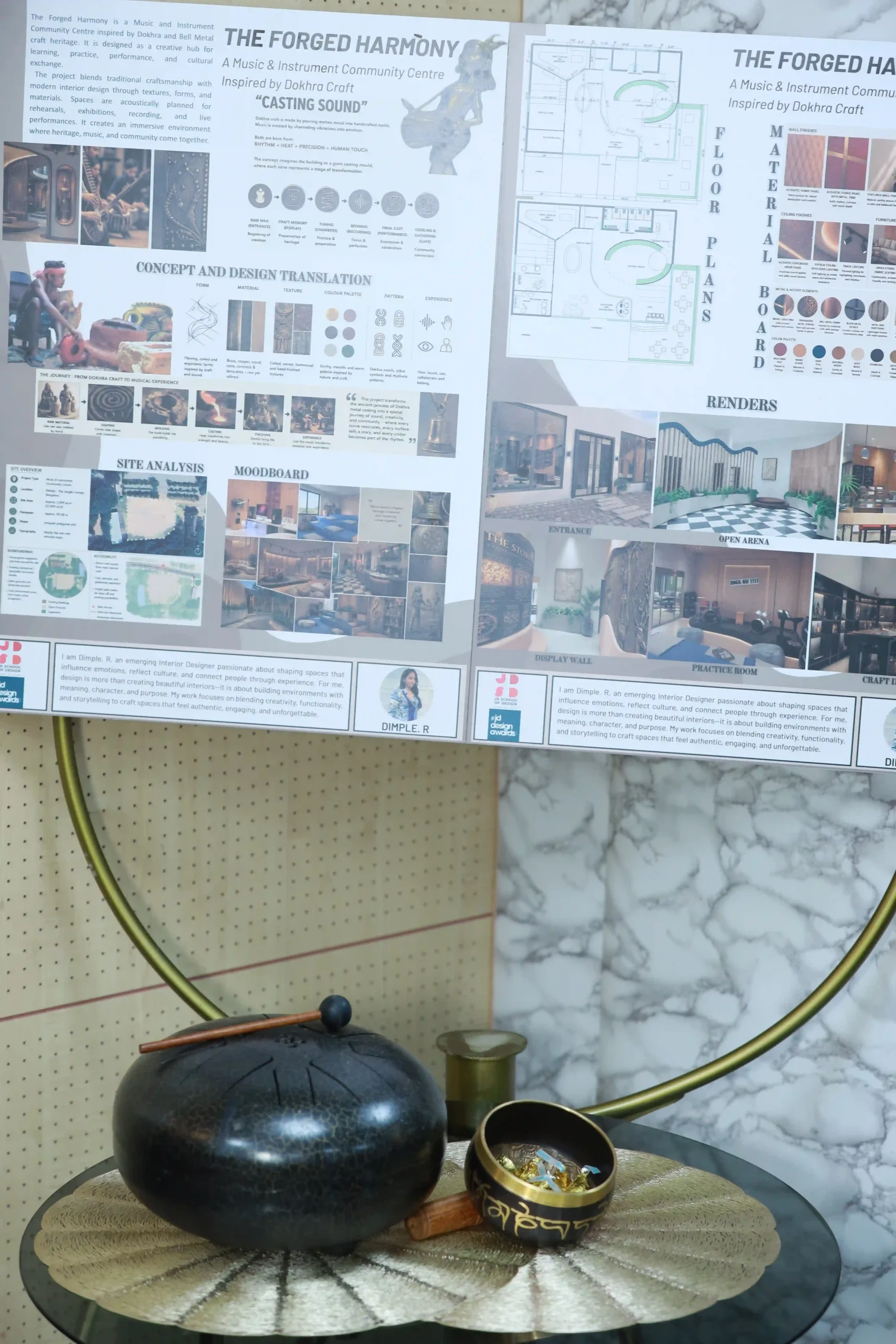
the project identifies the need for integrated spaces that bridge traditional handmade practices with contemporary professional settings. Materials such as handcrafted metal finishes, warm metallic textures, natural materials, and tactile surfaces, along with techniques including sculptural partitions, acoustic metal panels, handcrafted furniture systems, and curved circulation planning, were chosen to achieve visual continuity, warmth, and interactive functionality.Visually, the project is defined by organic forms, metallic tones, textured surfaces, and fluid spatial transitions that reflect the handcrafted nature of Dhokra artistry. The final outcome, a contemporary community and co-working hub, embodies creativity, craftsmanship, and collective growth while seeking to strengthen connections between artisans, users, and modern creative industries.Through this project, the designer aims to highlight how traditional crafts can evolve into active and functional components of contemporary architecture, positioning design as a tool for cultural preservation, collaboration, and economic empowerment. Ultimately, “Forged Harmony – The Dhokra Community Hub” stands as a reflection of heritage shaped into modern community experiences, where craft becomes both the identity and the living foundation of the space.