

The project is designed for modern mall visitors and tech-savvy consumers, keeping convenience, accessibility, and user independence at the core of the design process. The store enables users to independently browse, select, and purchase products through AI-enabled systems and interactive interfaces without requiring human assistance.The design approach focuses on automation, intuitive circulation, and experiential retail, ensuring that the outcome is both efficient and engaging. Through research into emerging retail technologies,
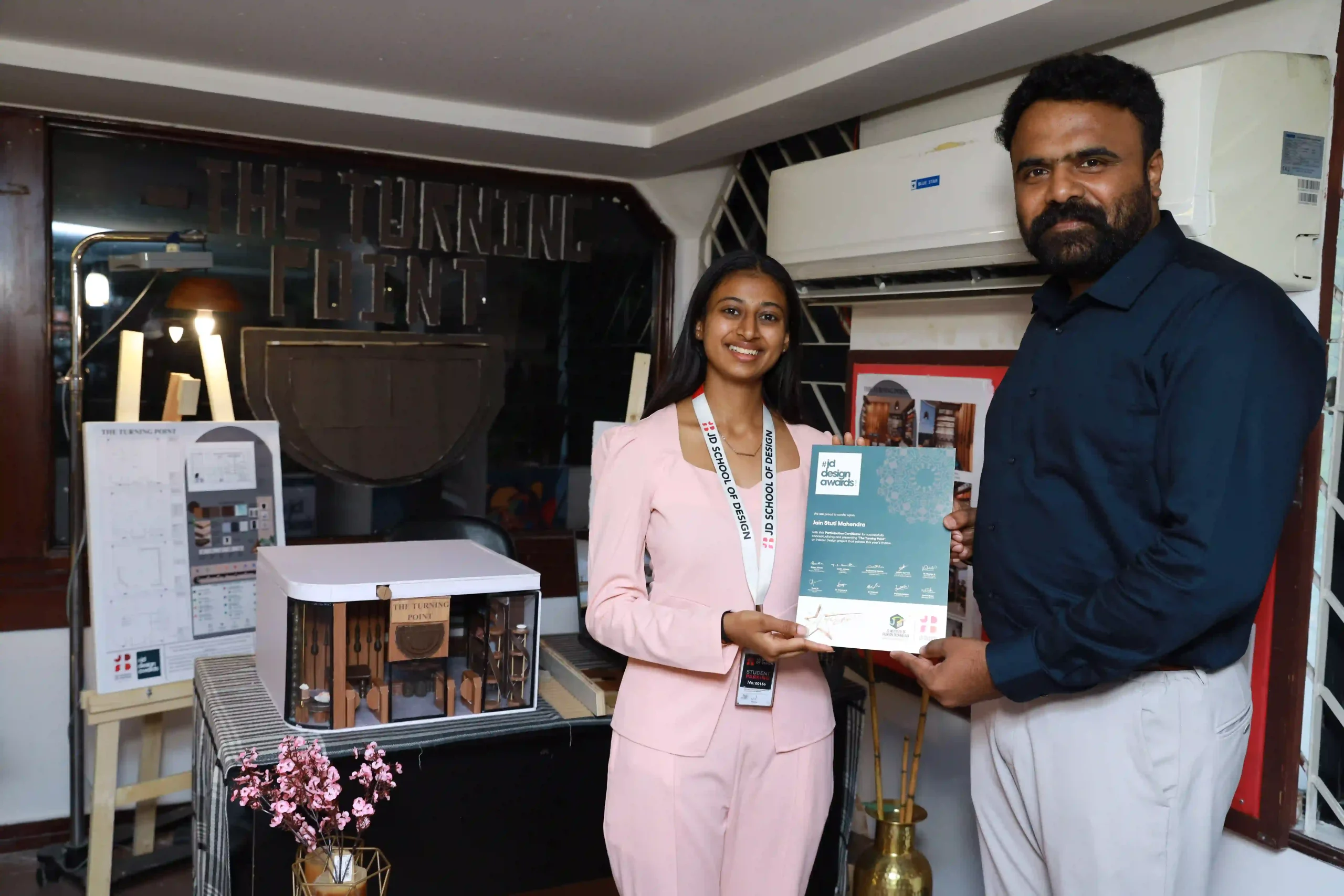



consumer behaviour, and traditional wooden turning techniques, the project identifies the need for future-ready retail spaces that balance technology with cultural identity. Materials such as engineered wood, laminates, glass, and metal were combined with AI-enabled surveillance systems, automated billing technologies, and loop-based circulation planning to achieve a seamless and user-centric shopping experience.
Visually, the project is defined by cylindrical forms, fluted surfaces, rhythmic patterns, and warm wooden textures that reflect the rotational movement and craftsmanship of Gujarat’s wooden turning tradition. The final outcome, a humanless AI-integrated gifting store, embodies innovation, efficiency, and cultural reinterpretation while creating an immersive and frictionless retail journey for users.Through this project, the designer aims to highlight how traditional craftsmanship can inspire contemporary retail systems, positioning design as a tool for technological innovation, sustainability, and experiential engagement. Ultimately, “The Turning Point” stands as a reflection of how heritage and automation can coexist within modern retail design, transforming shopping into a smart, intuitive, and future-focused experience.
