

for workplaces that are emotionally engaging, sustainable, and contextually rooted.The project is designed for creative professionals, designers, and collaborative work communities, keeping their need for flexibility, comfort, interaction, and inspiration at the core of the design process.The design approach focuses on functionality, adaptability, sustainability, and spatial identity, ensuring that the outcome is both practical and meaningful. Through research into traditional Pinjirakari joinery systems, contemporary office culture, and modular design strategies, the project identifies the need for workspaces that move beyond efficiency to create a stronger emotional and cultural connection for users.
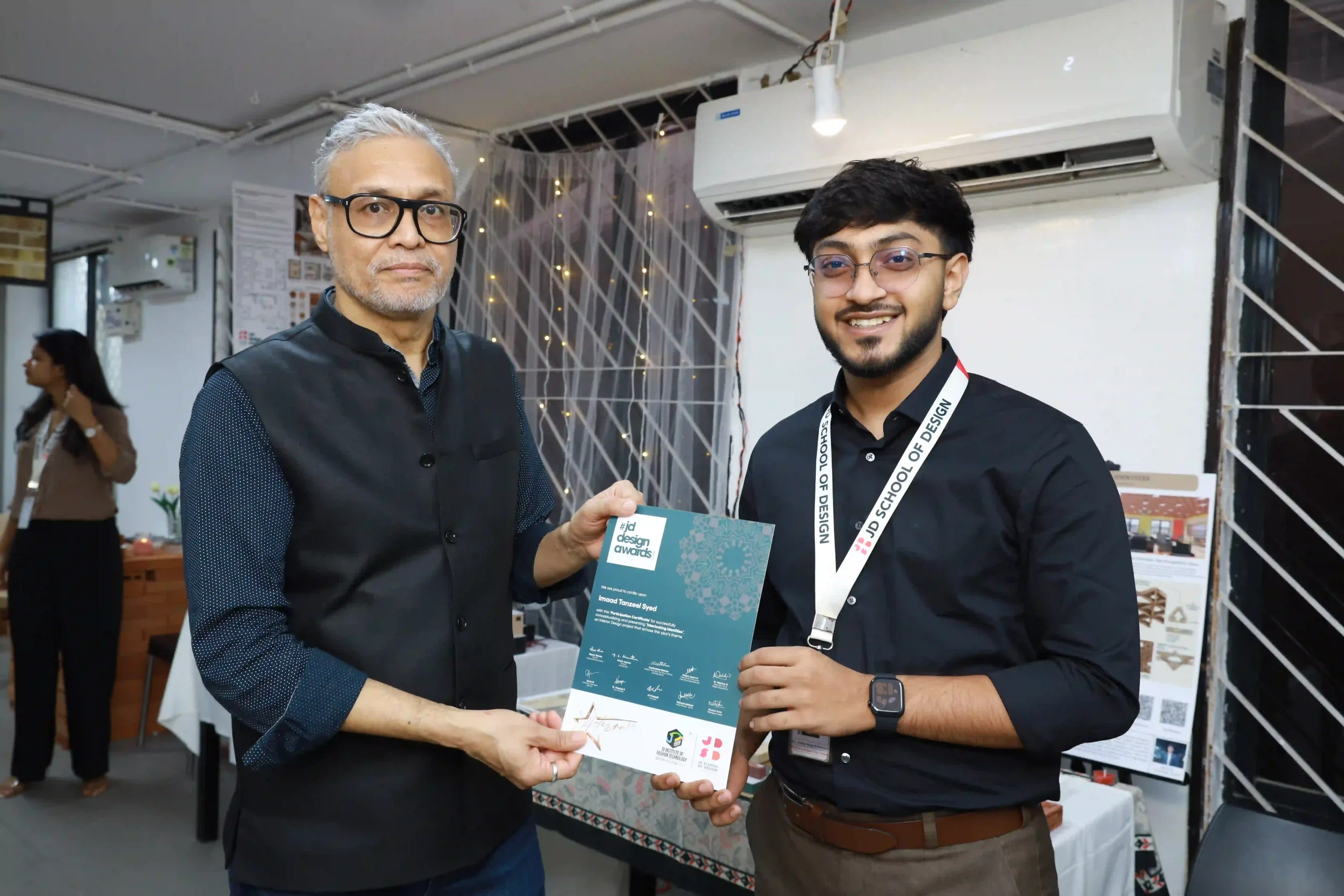


Materials such as natural wood, textured finishes, integrated lighting systems, and modular structural components were chosen to achieve warmth, acoustic comfort, durability, and visual continuity. Techniques including interlocking joinery, modular construction, CNC precision cutting, and integrated lighting design were used to reinterpret traditional craftsmanship into a contemporary office environment.Visually, the project is defined by rhythmic geometric patterns, warm wooden textures, layered ceiling systems, and clean contemporary forms that reflect the precision and beauty of handcrafted joinery. The final outcome, a culturally rooted and adaptive design office, embodies collaboration, innovation, and material intelligence, seeking to create a workspace that inspires creativity while maintaining a strong connection to artisanal heritage.Through this project, the designer aims to highlight the evolving relevance of traditional craftsmanship within modern architecture and interior design, positioning design as a tool for cultural continuity, sustainability, and innovation. Ultimately, “Interlocking Identities” stands as a reflection of how heritage techniques can shape future-ready environments, where traditional craftsmanship becomes an active and functional part of contemporary spatial experience.
